

FlowForge™ — Seal Cracked Aluminum, Copper or Steel Using Only a Lighter
Repair Broken Metal Using Just a Lighter — Under 60 Seconds.
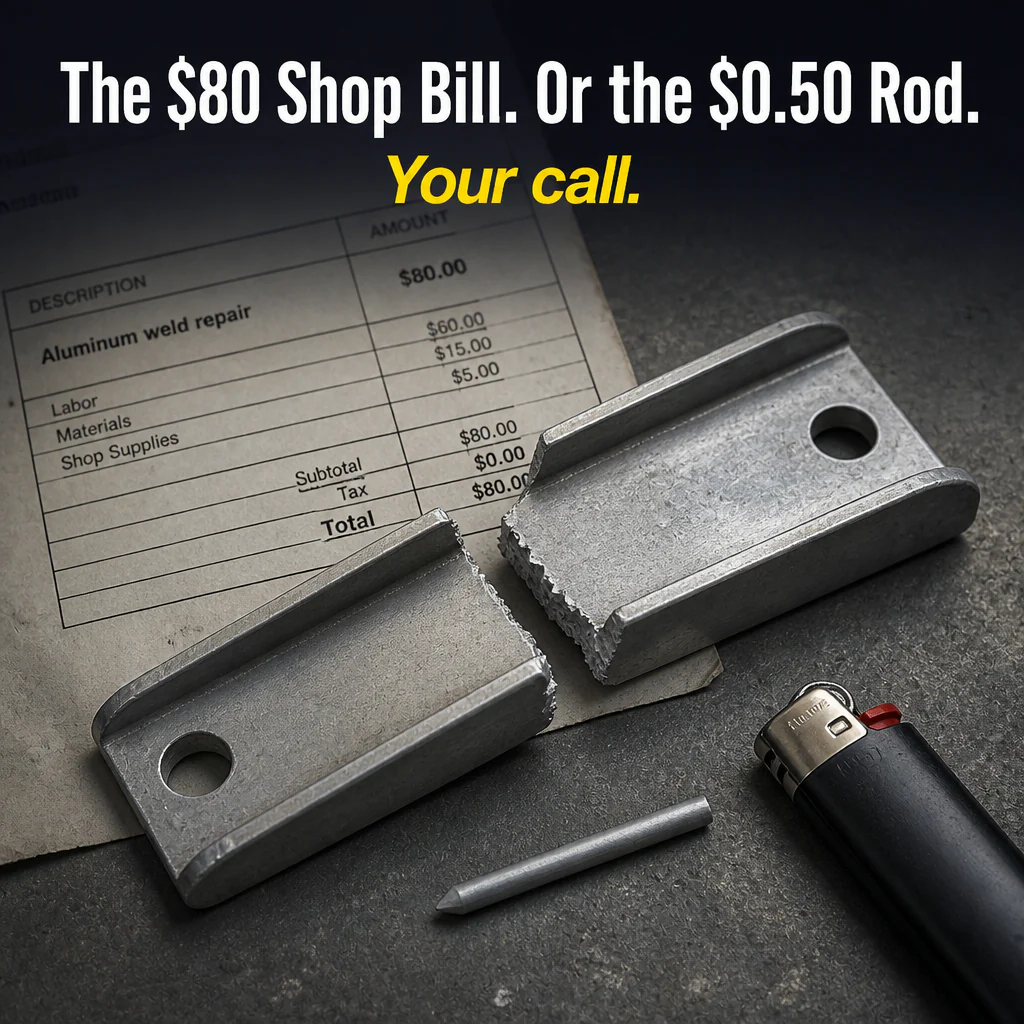
You have a broken aluminum bracket, a dripping copper pipe, or a tiny crack in a steel hinge. The local welder charges $80 and a week of waiting. A TIG welder costs $500+ even before you buy a gas cylinder. FlowForge™ Low-Temp Welding Rods handle the fix in 60 seconds with a tool you already carry — a simple lighter.

Quit Overpaying a Welder for a Small 4-Inch Repair.
Aluminum is notoriously tricky to weld. So is pot metal. And anything thin is a challenge. That’s why most DIYers end up gluing parts with JB Weld (which cracks in weeks), driving to a welder (gone for days, paying double), or just living with the broken gear until it fails completely. None of those solutions truly fix the small jobs piling up in your workshop.

What Makes FlowForge™ Different
➤ Melts at Lighter-Level Heat, Not a Torch’s Blaze — The silicon-rich alloy core liquefies at 380–400°C (about 720°F). Pure aluminum melts at 1,220°F. This difference means a pocket lighter or simple propane torch can melt the rod — but stays cool enough to avoid burning thin metal sheets.
➤ Joins Six Metals With One Rod — Works on aluminum, copper, stainless steel, galvanized cast iron, iron, and galvanized steel. One rod replaces three types of filler and saves your head from the guessing game.
➤ Self-Fluxing — No Gunk, No Mess — Flux is embedded inside the rod. Heat the base metal, press the rod to the joint, and watch it flow through the crack. No sticky paste to apply, no powder to scatter, no fumes clouding your garage.

How It Really Works
Just three simple steps, the same every time:
1. Clean the joint with a stainless steel brush to remove the oxide layer.
2. Heat the base metal (not the rod) using a lighter or torch for 30–60 seconds until it’s hot enough to melt the rod on contact.
3. Touch the rod to the joint, letting it flow into the crack like solder, sealing the gap and setting solid within a minute.
The key is "heat the base metal, not the rod." Most people who claim these rods didn’t work held the flame directly on the rod. Nail it once, and you’ll never mess it up again.

Why DIYers Are Secretly Swapping This for $500 Welders
"Was quoted $80 to weld a 4-inch bracket on my pontoon trailer at the local shop. Took a chance using these rods with a Bic lighter. Whole thing took under 90 seconds. Three weeks and 400 miles of towing later, the weld is still rock solid." — Mark T.
"Was ready to toss a $200 patio chair because one weld cracked. Fixed it with one rod and propane torch in the garage. You can’t even spot the break now." — Carla R.
"Sounded too good to be real. It works. The welds survived a hammer test — the metal around the joint failed before the seam did." — Dan H.

FlowForge™ vs. Traditional Methods
| FlowForge™ Rods | TIG / MIG Welder | JB Weld / Epoxy | |
|---|---|---|---|
| Tool required | Pocket lighter or propane torch | $500+ machine plus gas cylinder | None |
| Setup time | About 30 seconds | 15–30 minutes | None |
| Works on aluminum | Yes — even thin gauges | Yes, but needs high skill | Bonds but cracks under stress |
| Holds under vibration | Yes — flows into the joint | Yes | No — brittle and fails fast |
| Flux required | No — self-fluxing core | Yes (separate) | No |
| Beginners friendly | One YouTube video and done | Months of practice | Easy but weak |
Specs
- Rod length: 78mm (3.07 inches) per rod
- Melt range: 380–400°C (716–752°F)
- Works on: aluminum, copper, stainless steel, galvanized cast iron, iron, galvanized steel
- Flux: built into the core — no separate paste or powder needed
- Heat source: standard pocket lighter or any basic propane torch
- Pack sizes: 6, 12, 24, or 48 rods
FAQ
Is this true welding or just brazing?
Technically, it’s brazing — but the bond withstands hammer tests, loads, and vibrations just like a proper weld for small fixes. Usually, the joint outlasts the surrounding metal.
Will it work on very thin aluminum without burning through?
Yes — that’s the purpose of the low-temp formula. Because the rod melts at 720°F instead of aluminum’s 1,220°F, you can fix thin sheet metal, tubing, and castings that TIG welding would warp.
Can a regular pocket lighter really reach high enough heat?
For small joints and thin metal — yes. For thicker materials (over ~3mm), a basic propane torch or jet lighter heats faster and flows cleaner. Both are effective.
Do I need special brushes or flux?
No external flux — it’s combined inside the rod. A cheap stainless brush helps clear the oxide layer from aluminum before heating, but that’s likely the only tool you’ll need, and it’s probably already in your toolbox.
How many rods do typical repairs require?
A 2-inch crack takes about half a rod. A 12-rod pack covers most homeowner repairs for a year. A 48-pack suits folks with workshops, side gigs, or boats.
What CAN’T it be used on?
Critical structural welds (engine mounts, suspension parts, or anything load-bearing in a moving vehicle). For those, a real welder is still the way to go. For everything else — brackets, frames, pipes, tools, furniture, fences, gates — this rod fits the bill.

Fix It or Get Your Money Back
If FlowForge™ doesn’t bond your repair as cleanly as shown, return it within 30 days for a full refund — no need to send back the rods you used. We’d rather absorb the cost of a sample pack than have you tell friends it didn’t work.
Original: $24.99
-70%$24.99
$7.50Product Information
Product Information
Shipping & Returns
Shipping & Returns
Description
Repair Broken Metal Using Just a Lighter — Under 60 Seconds.
You have a broken aluminum bracket, a dripping copper pipe, or a tiny crack in a steel hinge. The local welder charges $80 and a week of waiting. A TIG welder costs $500+ even before you buy a gas cylinder. FlowForge™ Low-Temp Welding Rods handle the fix in 60 seconds with a tool you already carry — a simple lighter.
Quit Overpaying a Welder for a Small 4-Inch Repair.
Aluminum is notoriously tricky to weld. So is pot metal. And anything thin is a challenge. That’s why most DIYers end up gluing parts with JB Weld (which cracks in weeks), driving to a welder (gone for days, paying double), or just living with the broken gear until it fails completely. None of those solutions truly fix the small jobs piling up in your workshop.
What Makes FlowForge™ Different
➤ Melts at Lighter-Level Heat, Not a Torch’s Blaze — The silicon-rich alloy core liquefies at 380–400°C (about 720°F). Pure aluminum melts at 1,220°F. This difference means a pocket lighter or simple propane torch can melt the rod — but stays cool enough to avoid burning thin metal sheets.
➤ Joins Six Metals With One Rod — Works on aluminum, copper, stainless steel, galvanized cast iron, iron, and galvanized steel. One rod replaces three types of filler and saves your head from the guessing game.
➤ Self-Fluxing — No Gunk, No Mess — Flux is embedded inside the rod. Heat the base metal, press the rod to the joint, and watch it flow through the crack. No sticky paste to apply, no powder to scatter, no fumes clouding your garage.
How It Really Works
Just three simple steps, the same every time:
1. Clean the joint with a stainless steel brush to remove the oxide layer.
2. Heat the base metal (not the rod) using a lighter or torch for 30–60 seconds until it’s hot enough to melt the rod on contact.
3. Touch the rod to the joint, letting it flow into the crack like solder, sealing the gap and setting solid within a minute.
The key is "heat the base metal, not the rod." Most people who claim these rods didn’t work held the flame directly on the rod. Nail it once, and you’ll never mess it up again.
Why DIYers Are Secretly Swapping This for $500 Welders
"Was quoted $80 to weld a 4-inch bracket on my pontoon trailer at the local shop. Took a chance using these rods with a Bic lighter. Whole thing took under 90 seconds. Three weeks and 400 miles of towing later, the weld is still rock solid." — Mark T.
"Was ready to toss a $200 patio chair because one weld cracked. Fixed it with one rod and propane torch in the garage. You can’t even spot the break now." — Carla R.
"Sounded too good to be real. It works. The welds survived a hammer test — the metal around the joint failed before the seam did." — Dan H.
FlowForge™ vs. Traditional Methods
| FlowForge™ Rods | TIG / MIG Welder | JB Weld / Epoxy | |
|---|---|---|---|
| Tool required | Pocket lighter or propane torch | $500+ machine plus gas cylinder | None |
| Setup time | About 30 seconds | 15–30 minutes | None |
| Works on aluminum | Yes — even thin gauges | Yes, but needs high skill | Bonds but cracks under stress |
| Holds under vibration | Yes — flows into the joint | Yes | No — brittle and fails fast |
| Flux required | No — self-fluxing core | Yes (separate) | No |
| Beginners friendly | One YouTube video and done | Months of practice | Easy but weak |
Specs
- Rod length: 78mm (3.07 inches) per rod
- Melt range: 380–400°C (716–752°F)
- Works on: aluminum, copper, stainless steel, galvanized cast iron, iron, galvanized steel
- Flux: built into the core — no separate paste or powder needed
- Heat source: standard pocket lighter or any basic propane torch
- Pack sizes: 6, 12, 24, or 48 rods
FAQ
Is this true welding or just brazing?
Technically, it’s brazing — but the bond withstands hammer tests, loads, and vibrations just like a proper weld for small fixes. Usually, the joint outlasts the surrounding metal.
Will it work on very thin aluminum without burning through?
Yes — that’s the purpose of the low-temp formula. Because the rod melts at 720°F instead of aluminum’s 1,220°F, you can fix thin sheet metal, tubing, and castings that TIG welding would warp.
Can a regular pocket lighter really reach high enough heat?
For small joints and thin metal — yes. For thicker materials (over ~3mm), a basic propane torch or jet lighter heats faster and flows cleaner. Both are effective.
Do I need special brushes or flux?
No external flux — it’s combined inside the rod. A cheap stainless brush helps clear the oxide layer from aluminum before heating, but that’s likely the only tool you’ll need, and it’s probably already in your toolbox.
How many rods do typical repairs require?
A 2-inch crack takes about half a rod. A 12-rod pack covers most homeowner repairs for a year. A 48-pack suits folks with workshops, side gigs, or boats.
What CAN’T it be used on?
Critical structural welds (engine mounts, suspension parts, or anything load-bearing in a moving vehicle). For those, a real welder is still the way to go. For everything else — brackets, frames, pipes, tools, furniture, fences, gates — this rod fits the bill.
Fix It or Get Your Money Back
If FlowForge™ doesn’t bond your repair as cleanly as shown, return it within 30 days for a full refund — no need to send back the rods you used. We’d rather absorb the cost of a sample pack than have you tell friends it didn’t work.